

Written by Team Wizikey
November 20, 2024
Breathe Easy or Struggle to Breathe? The Untold Story of Pollution in India
Discover how media intelligence exposes disparities in pollution reporting across Indian cities. Learn why some voices remain unheard in the fight for cleaner air.


Imagine waking up to clean air in one city while another chokes on smog. Why do some pollution crises make headlines, while others stay unnoticed?
The Wizikey Pollution News Analysis Report 2023-2024 uncovers startling disparities in media coverage across Indian cities. It’s not just about pollution levels—it’s about whose stories are heard.
Before you dive in, let’s hear what this means for our cities and us.
Methodology: Unveiling the Patterns
Wizikey analyzed over 500,000 news articles from 50,000 publications (January 2023–November 2024) using its advanced AI algorithms. AQI data from www.aqi.in was cross-referenced to measure the disparity between pollution levels and media attention. This approach highlights critical gaps in reporting.
Using its advanced AI-powered news analysis, Wizikey groups cities into four categories, each telling a different story of air quality and attention.
The Four Faces of Pollution Coverage
Every city tells a unique story about pollution. Wizikey’s report groups them into four categories based on air quality and media attention.
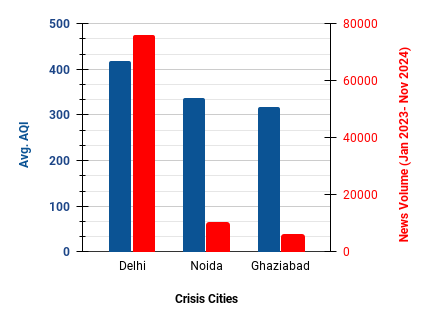
- Crisis Cities: High Pollution, High News Coverage
Observation: Delhi gets over 75,000 articles, overshadowing nearby cities like Noida, despite similar AQI levels. Delhi sets an example of how pollution crises should be reported. Read graph below.
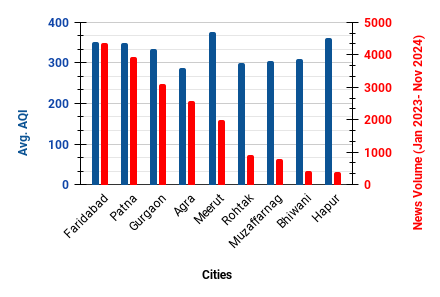
2. Silent Sufferers: High Pollution, Low News Coverage
Observation: These cities have AQI levels on par with Delhi, but their coverage is only 5% of Delhi’s. Without media attention, these cities lack the pressure needed to drive policy and awareness. Read graph below.
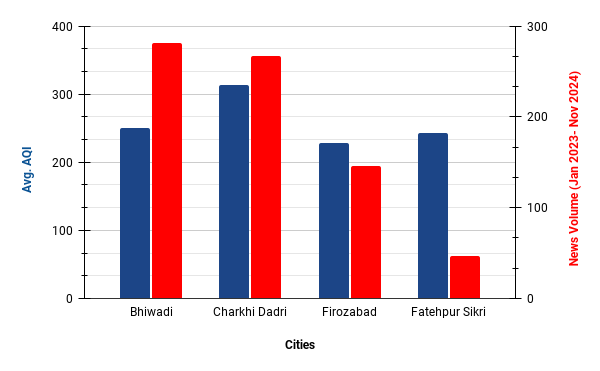
3. Invisible Danger Zones: High Pollution, No News Coverage
Observation: These cities receive less than 0.06% of Delhi’s media coverage, despite equally hazardous air. Silence leads to inaction, putting lives at risk. Read graph below.
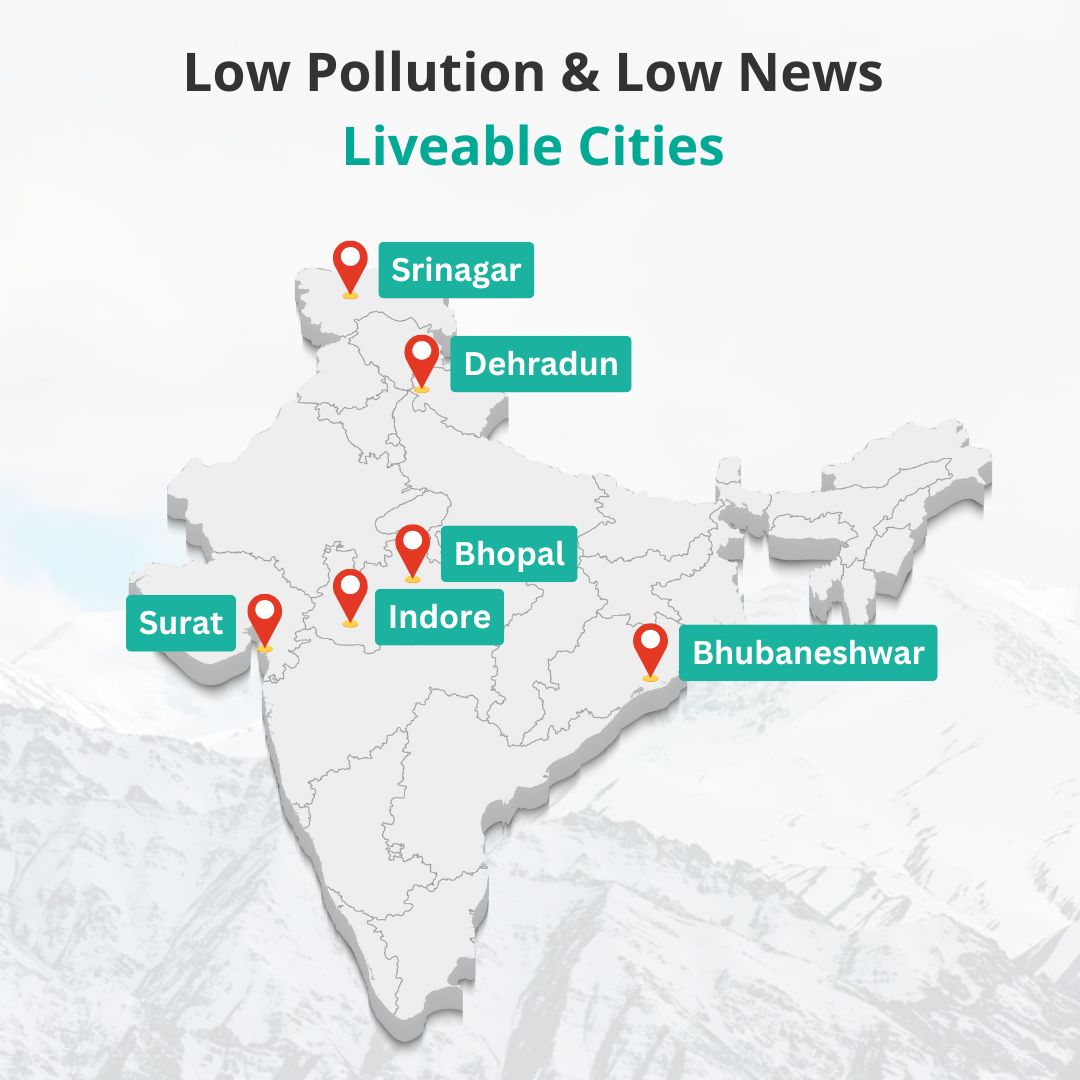
4. Liveable Cities: Low Pollution, Low News Coverage
Observation: These cities enjoy cleaner air and appropriately low media coverage.
Pollution Isn’t Seasonal, So Why Is Reporting?
Pollution reporting is often reactive, spiking during crises but fading as the seasons change. For example, Delhi saw 16,000 articles during its peak smog period in November 2023 but only 5,000 articles in 2024—a 70% decline. Read graph below.
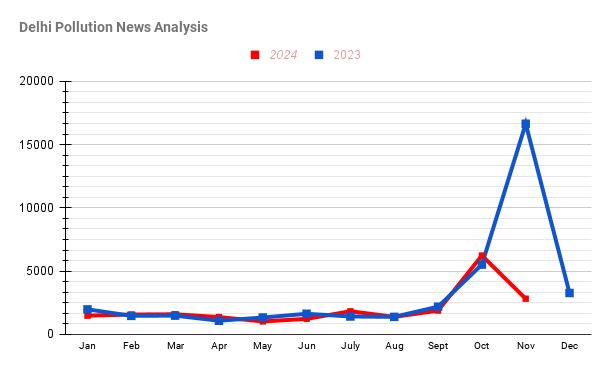
This reactive approach fails to spotlight the root causes of pollution, such as stubble burning, vehicular emissions, and industrial waste, which require sustained media focus to drive change.
The Cost of Ignored Pollution
Behind the numbers are real human stories:
- Families battling respiratory illnesses.
- Schools forced to shut during smog emergencies.
- Workers risking their health in toxic environments.
Yet, media silence in Silent Sufferers and Invisible Danger Zones denies these communities the attention they need. Media intelligence can change this narrative by identifying gaps and pushing for equitable reporting.
What Can Be Done?
- Year-Round Media Strategy: Encourage consistent coverage beyond crisis months.
- Leverage Media Intelligence: Tools like Wizikey can spotlight underreported areas, driving awareness and policy changes.
Be Part of the Change
Pollution isn’t just an environmental crisis; it’s a public health emergency. By using Media Intelligence and Analysis, we can ensure every city’s story is heard.
Start by tracking your city’s media footprint and amplifying the conversation with Wizikey
#MyRightToBreathe

Related Posts


Unified Media Monitoring: One Dashboard for News, Broadcast, Reddit and Facebook
Track news, Broadcast, Reddit and Facebook in one dashboard with unified media monitoring.

Broadcast Monitoring: Why PR Teams Need to Track Live TV Narratives
Track live TV narratives, competitors, spokespersons and alerts with Broadcast Monitoring.
All Stories
•May 22, 2026

How Much Does It Cost to Monitor Your Brand Online in 2026?
Brand monitoring costs can range from free alerts to enterprise media intelligence platforms. Here’s what affects pricing:
Unified Media Monitoring: One Dashboard for News, Broadcast, Reddit and Facebook
Track news, Broadcast, Reddit and Facebook in one dashboard with unified media monitoring.
Broadcast Monitoring: Why PR Teams Need to Track Live TV Narratives
Track live TV narratives, competitors, spokespersons and alerts with Broadcast Monitoring.
All Stories
•May 22, 2026
How Much Does It Cost to Monitor Your Brand Online in 2026?
Brand monitoring costs can range from free alerts to enterprise media intelligence platforms. Here’s what affects pricing:

Wizikey saves time by bringing relevant brand mentions from news, blogs, podcasts and other mediums in one place. It provides insights to build better awareness. It is built by communications' professionals who struggled with excel sheets, clunky software and decided to solve it themselves.


Contact Us
USA Office: 1441 Norman Drive, Sunnyvale CA 94087, USA
© 2026 Wizikey. All rights reserved